Kick warning signs, indicators and shut in methods
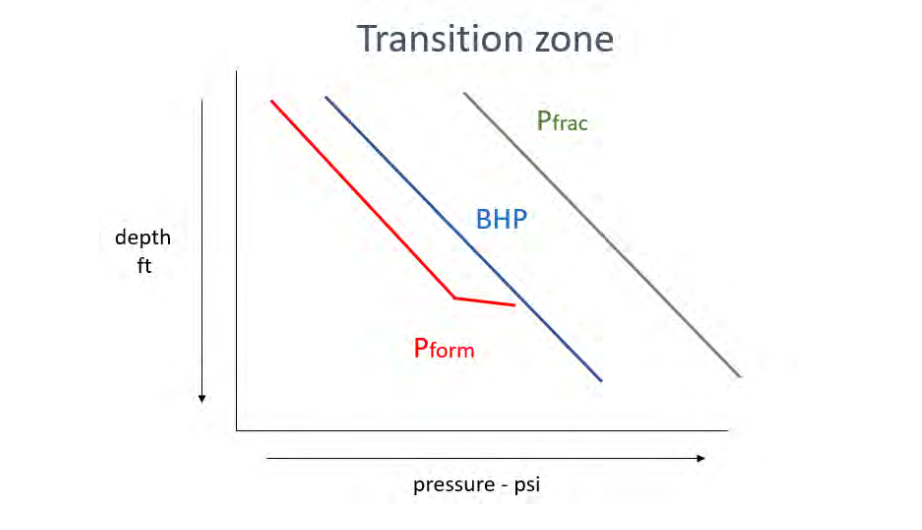
We already know that pressure increases with depth so we can predict to a certain extent what our likely formation pressure will be and can therefore plan for that change accordingly. Sometimes formation pressure can be greater than we had expected and that is when we could take a kick.
Abnormally pressured formations do not appear from no-where however and we usually get messages from the well as we drill through this transition zone. These messages are often called kick warning signs.
Common kick warning signs include:
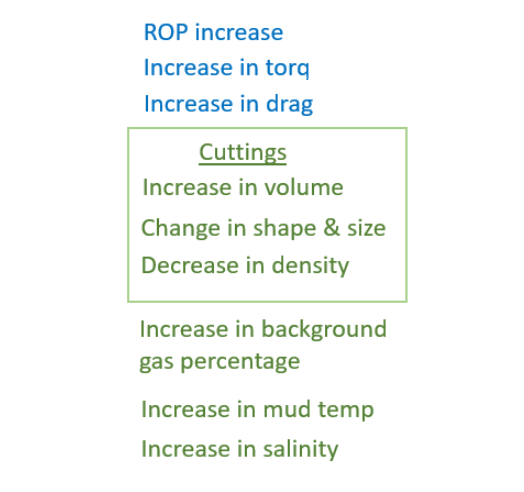
Anytime the driller sees a significant change in trends, particularly a change in ROP (a drilling break), then a flow check should be conducted. If it is positive (flowing) then the well should be shut in. If it is negative (no flow) then a decision must be made as to what to do next. Should we circulate bottoms up and take a look at the cuttings or should we continue drilling?
Let’s change things up a bit – formation pressure has now increased to 5,700 psi meaning not only have we lost primary well control, but we are also underbalance with the pumps running. We will take a kick and the well will tell us this is happening – we should get one or more positive kick indicators.
Usually, the first positive kick indicator a driller gets is an increase in return flow from the well. This is often followed by a pit gain. There is a third positive kick indicator that can be seen which is a drop in pump pressure caused by the U-tube going out of balance and trying to regain that balance. Depending on how your pumps are controlled you might see this as an increase in pump speed.
The well is flowing and needs to be secured. Exact steps and procedures will have been developed on a rig by rig basis and should ideally be posted where the driller has easy and immediate access to them but will be something along the lines of:
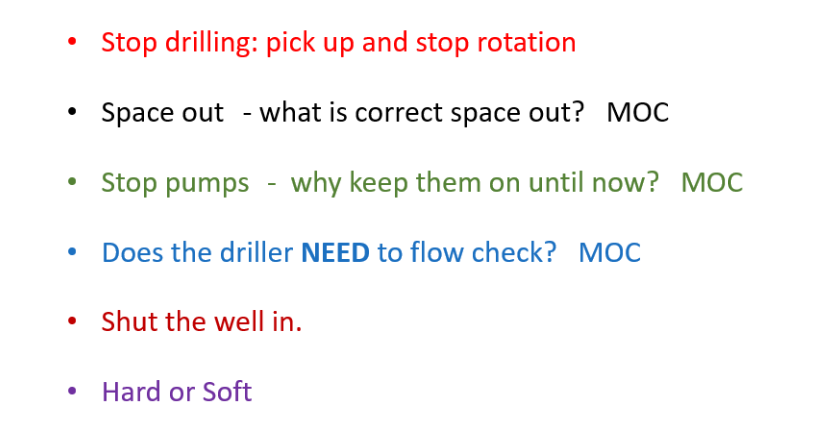
Most companies use the hard shut in method as it is the quickest and results in a smaller kick:
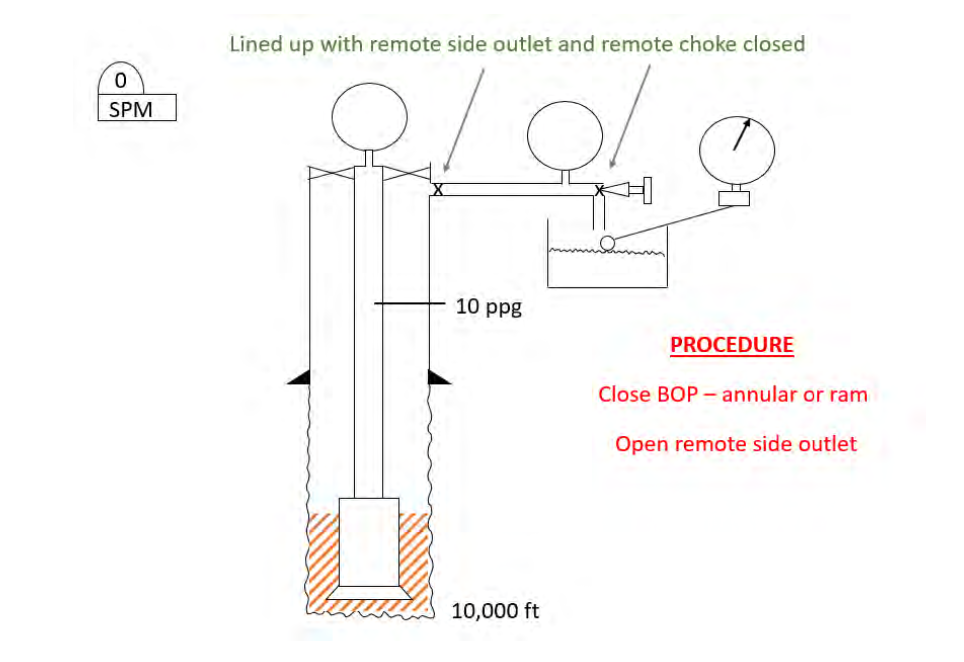
Once the well has been secured the driller should check that flow has stopped. If there is still flow from the well then another BOP should be closed. When flow has stopped the supervisor should be informed and the driller should go to the remote choke panel and start recording pressure every minute until they stabilise or the driller is advised differently by a supervisor.

With the well shut in and surface pressures stable the well is in balance – bottom hole pressure and formation pressure are equal. We now need to work out what formation pressure is. Looking at it visually we can see:
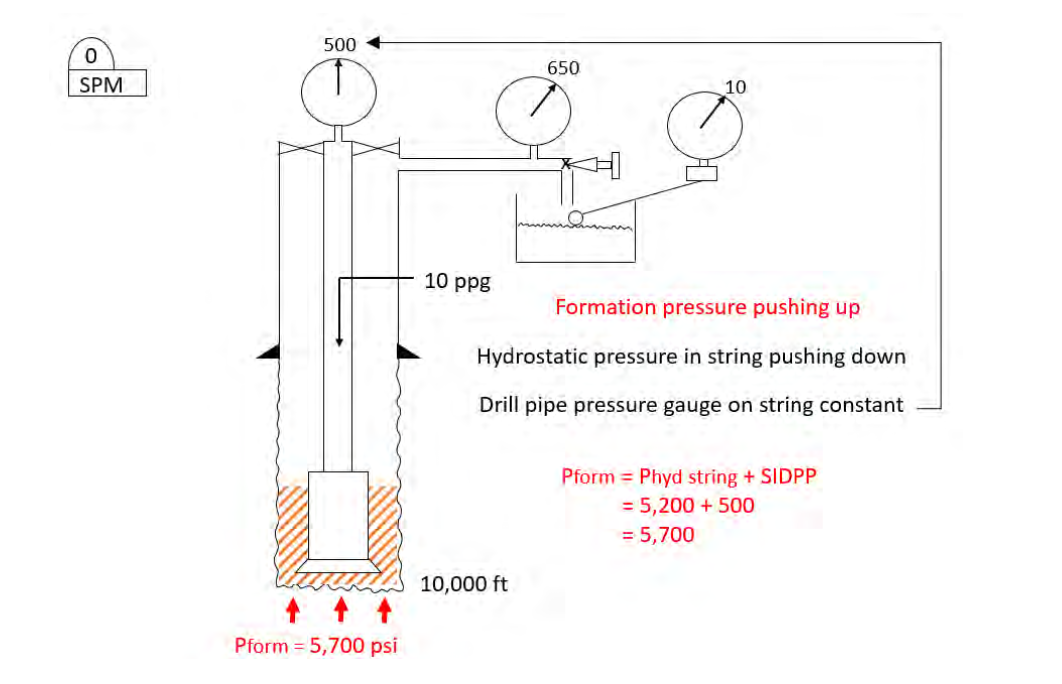
The principle behind the calculation we have just seen is the same principle that was behind BHCP and Fracture Pressure earlier:

BHCP and Pfrac are not on the IWCF formula sheet but Formation Pressure is, it’s formula 4.
If you have a float in the string (and let’s face it, you will have) then your SIDPP is likely to be zero and we need SIDPP to work out formation pressure. The float will have to be ‘bumped’ open by pumping very slowly into the string until you see a rise in casing pressure. When you see this rise in casing pressure then whatever you are reading on the drill pipe pressure gauge is taken to be SIDPP.
It is worth noting that because casing pressure has increased then you have charged up the well and you may have to take the increase in casing pressure away from the reading on the drill pipe gauge to get a true SIDPP. You may leave the increase on as overbalance. Each well in its own right and on it’s own conditions.
And so to the standard kill calculations, kill mud weight, ICP and FCP – IWCF formulas 13, 14 and 15 respectively.
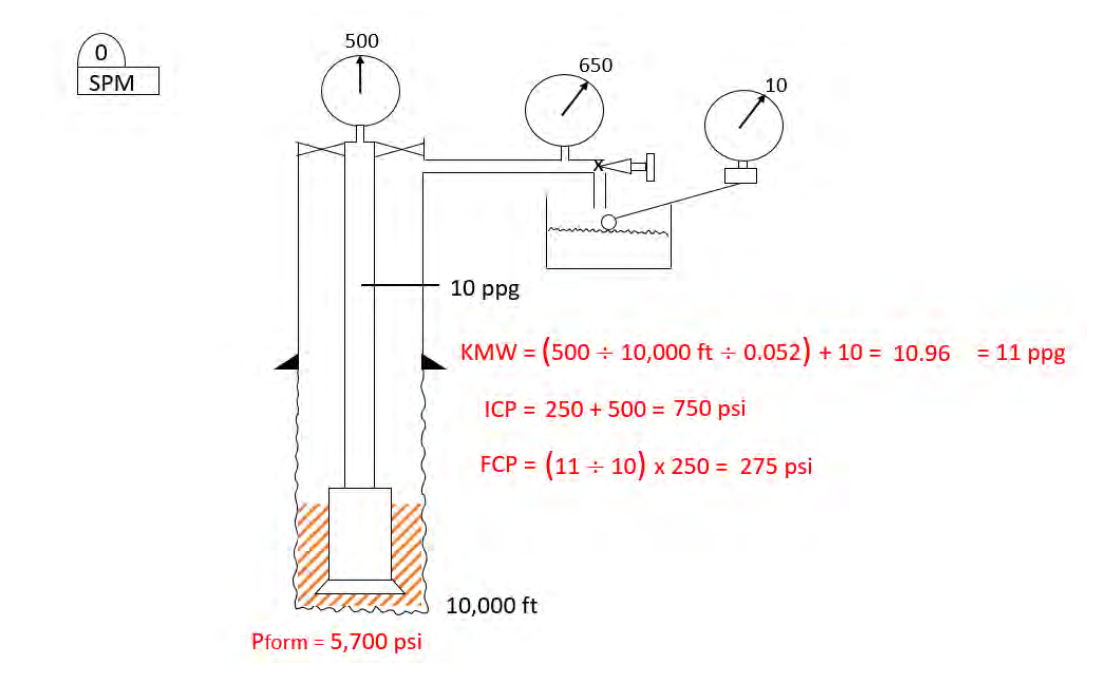
As mentioned earlier the kill mud weight calculation is a PDC hydrostatic variation. In fact you can put formation pressure through PDC using well TVD and you will get the same kill mud weight – try it.
And compare the FCP calculation to formula 10 – new pressure new mud weight – they are the same thing. FCP is simply the SCR for kill mud.
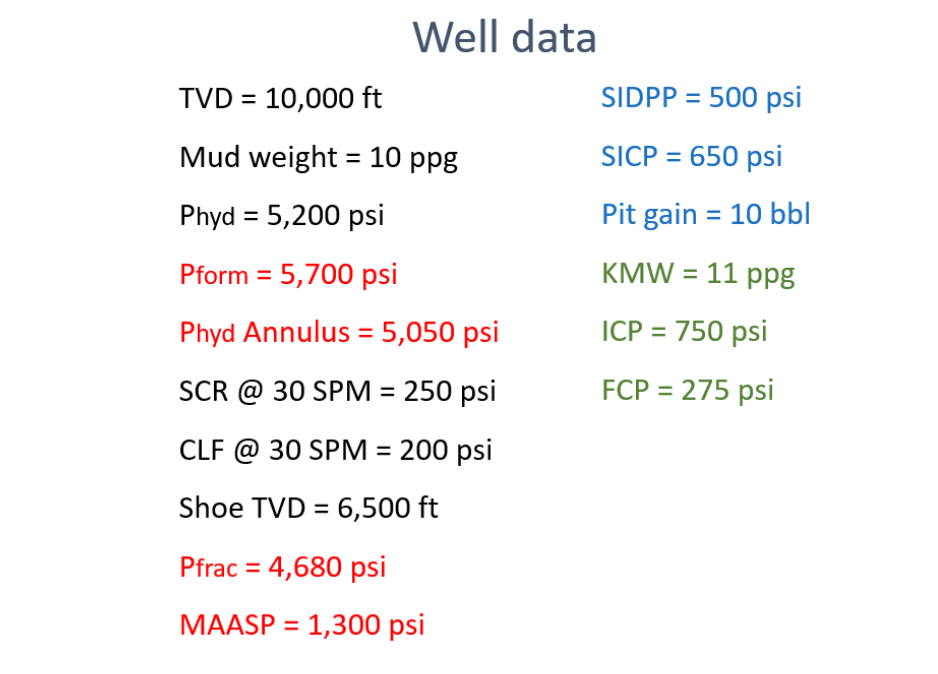
OK so this is where we’re at:
Final question for the moment.
How did I work out that the hydrostatic pressure in the annulus right now is 5,050 psi?
Let me leave that one with you.